L'Oréal Brasil
Discovery and redesign of 5 simultaneous e-commerces with in-depth research and a best-supplier award.
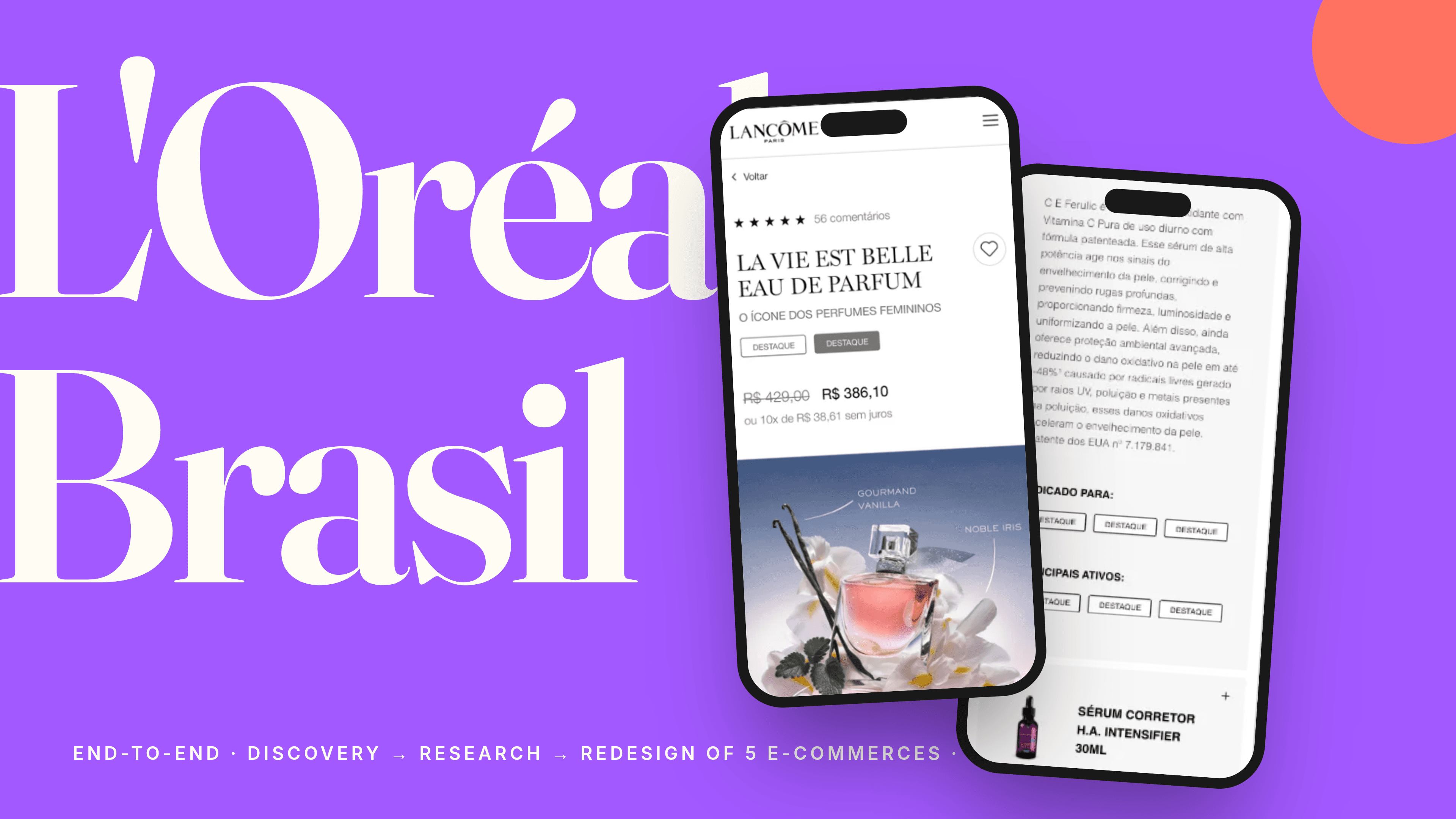
5 brands, 1 lean team and an unprecedented discovery process on the account
In June 2023 I took on the challenge at Dentsu to manage the experience of L'Oréal Brasil's 5 main e-commerces — Lancôme, Dermaclub, SkinCeuticals, Kérastase and Segredos de Salão — with a lean team of 1 PD, 1 Visual Designer, 1 PO and 3 devs.
The context was complex: the sites had just gone through a chaotic Salesforce migration, we spent nearly 30 days in bureaucratic contract and access processes, there was no clear communication or objectives between L'Oréal's internal divisions, and any experience or architecture change required global team approval and implementation — making deliveries slow and drawn-out.
Understand before recommending
Despite access limitations, I focused the first 30 days on building a solid understanding before any recommendation. This was a deliberate decision — without context, any suggestion would be superficial and hard to defend to the client.
Brand manuals, existing personas, customer comments on social media and Reclame Aqui. Main profile identified: women aged 26 to 60, middle class, spending R$150–R$250 monthly on hair. Critical perception: lack of credibility — the sites were not recognized as official L'Oréal channels.
Systematic identification of critical flaws: misaligned components, visual inconsistency, poorly sized images, lack of visual hierarchy and information-overloaded pages. Documented with evidence to present to the client.
Detailed analysis of Sephora, Natura, O Boticário and MAC — mapping UX patterns in the beauty and personal care segment to identify gaps and opportunities.
Solid data to support defensible recommendations
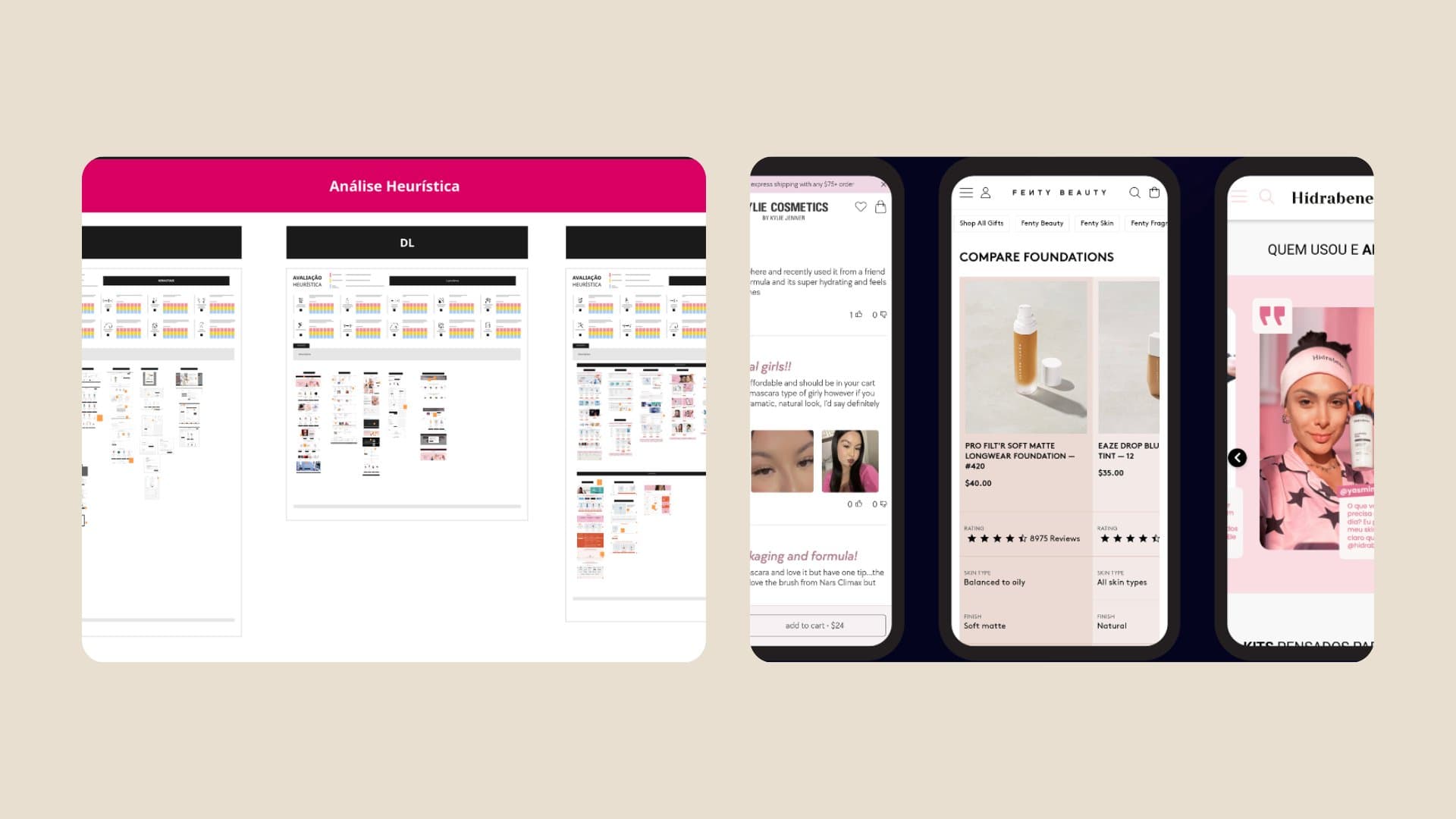
With initial hypotheses formulated, we needed more robust data before presenting recommendations to the client. I structured a second research phase with multiple combined methodologies.
Hotjar survey applied directly on the sites to map behaviors, preferences and pain points in the purchase journey. Initial focus on Segredos de Salão — the brand business priority at the time.
Analysis of session recordings, heat maps and Google Analytics data to identify navigation patterns, abandonment points and undeclared user behaviors.
Focused on the complete purchase flow. Critical finding: users navigated multiple times between cart, checkout and search before deciding — signaling lack of trust and difficulty comparing.
Mapping the current journey with friction points versus competitor journeys — highlighting opportunities to simplify checkout flow and order tracking.
What users revealed
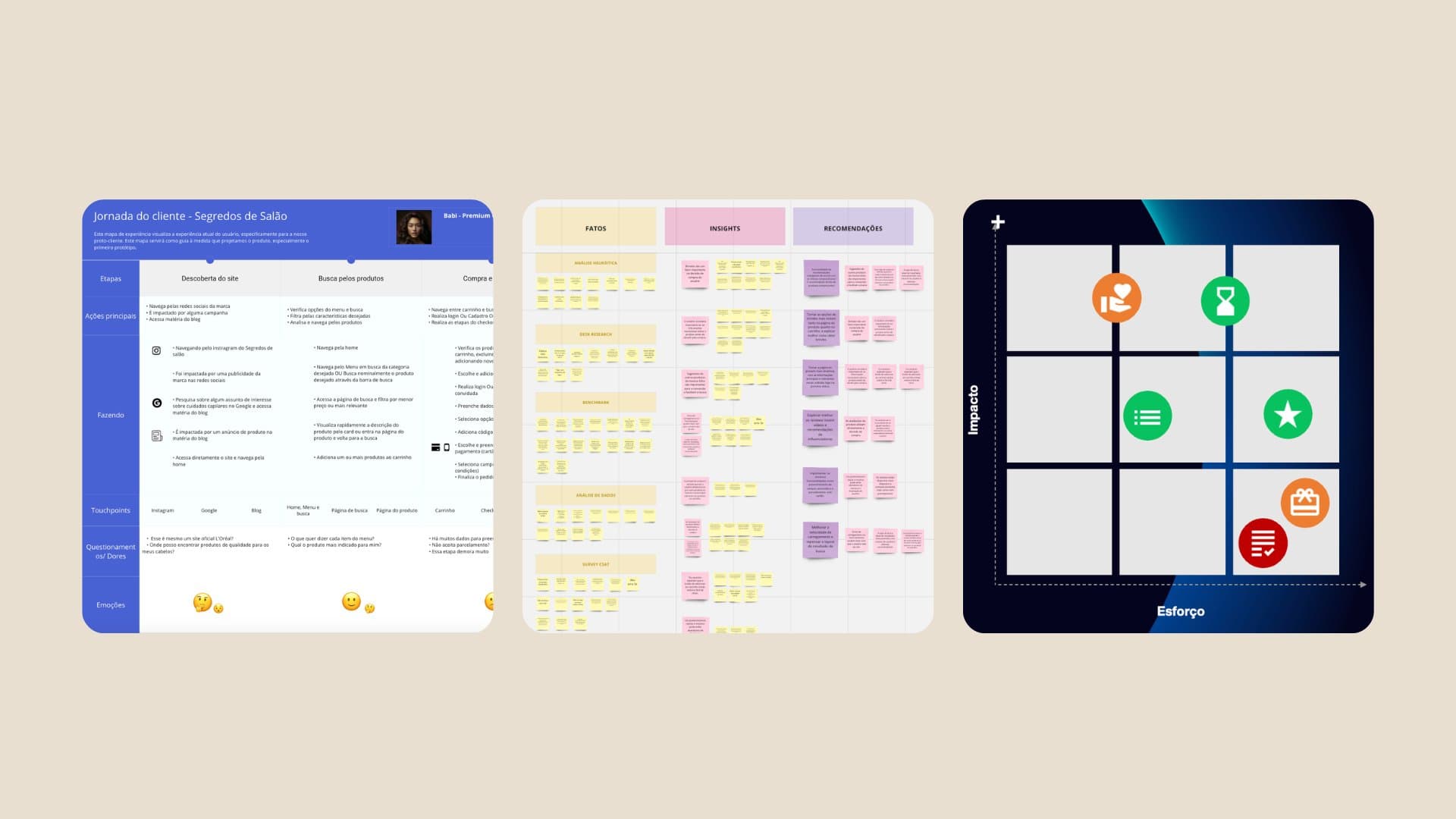
Interviews and behavioral data revealed consistent patterns that would not appear in quantitative data alone — especially those related to trust and cognitive effort in the purchase journey.
Many terms were not found despite having related products. Users wanted their last search saved and more recommendations directly in the search field.
Customers intending to buy a complete line reported difficulty and excessive delays finding all products. Clear opportunity for intelligent recommendations.
The "add to cart" button was below the line of sight with a very small click zone — already identified in the heuristic analysis and confirmed in tests.
Most customers had difficulty finding information about gifts — an important decision factor being wasted due to lack of visibility.
From research to co-creation: meeting in Rio de Janeiro
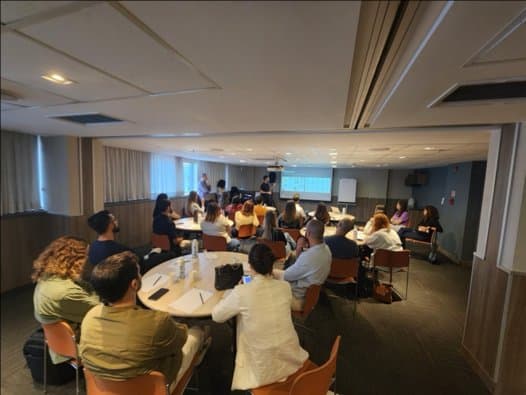
As a milestone for the research phase, we held an in-person meeting at L'Oréal's headquarters in Rio de Janeiro with key representatives from each division. We presented findings, prioritized recommendations and a study on cognitive biases in e-commerce.
The meeting included a collaborative prioritization workshop — where stakeholders from each brand voted on recommendations by impact and feasibility — followed by a joint ideation session. We left with Quick Wins defined for immediate implementation and a prioritized improvement backlog for each site.
This dynamic was decisive in creating alignment between divisions that did not have a habit of collaborating — and ensuring that recommendations had internal support before any implementation.
Three deliverables with measured impact
Focused on product kits and routines, with placements on the Home, product page and cart. Result: +1.6% conversion — the best result among the 5 brands.
Optimization of searched terms, expanded combinations, new mobile layout and restructured filters and product card. Result: reduced search time and more accurate results.
More comprehensive proposal with essential information in a visual and dynamic format, better element hierarchy and mobile visual comfort. Focus on reducing cognitive effort in purchase decision-making.
Best supplier award
After the deliverables, Dentsu was awarded by L'Oréal Brasil as best supplier of the year — a direct recognition of the UX work and the quality of the discovery and recommendation process.
Measured impact
What I would do differently
I would negotiate tool access from the first contact. We spent nearly 30 days in bureaucracy before getting real data — a high cost in short-deadline projects. The lesson was to anticipate this negotiation before signing the contract.
I would map governance between divisions before presentations. Understanding who approves what in each brand, what the internal conflicts of interest are and who needs to be in the room — before presenting any recommendation — would have significantly accelerated the approval process.